
The global push towards sustainable energy solutions is undeniable. As professionals, understanding the economic viability of different renewable energy sources is crucial for informed decision-making. Let’s delve into a comparative analysis of solar, wind, hydro, geothermal, and nuclear energy, focusing on their cost-benefit profiles and potential return on investment.
Solar Energy: The Decentralized Powerhouse
- Cost: Initial installation costs have significantly decreased, making solar increasingly competitive. However, factors like location, system size, and storage solutions impact overall expenses.
- Benefits: Low maintenance, scalability, and reduced reliance on fossil fuels. Technological advancements are driving efficiency gains.
- ROI: Excellent long-term ROI, especially with government incentives and net metering. Payback periods vary, but solar can significantly reduce electricity bills and generate revenue.
Wind Energy: Harnessing the Power of Air
- Cost: High upfront investment for turbines and infrastructure. Land acquisition and grid connection costs are also significant.
- Benefits: High energy output in suitable locations, low operational costs, and a well-established technology.
- ROI: Strong ROI in areas with consistent wind resources. Large-scale wind farms can generate significant revenue, but profitability is sensitive to wind variability.
Hydropower: The Reliable Giant
- Cost: Substantial upfront costs for dam construction and infrastructure. Environmental impact assessments and mitigation measures add to the expense.
- Benefits: Consistent and reliable energy output, long lifespan, and ancillary benefits like water storage and flood control.
- ROI: Long-term, stable returns. Large-scale hydropower projects can be highly profitable, but the initial investment is a significant barrier.
Geothermal Energy: Tapping into Earth’s Heat
- Cost: High initial drilling and infrastructure costs. Location-specific availability limits widespread deployment.
- Benefits: Consistent and reliable baseload power, low emissions, and minimal land footprint.
- ROI: Long-term, stable returns in areas with suitable geothermal resources. Geothermal power plants have high capacity factors and low operating costs.
Nuclear Energy: The High-Density Option
- Cost: Very high upfront costs for plant construction, licensing, and waste management.
- Benefits: High energy output, low carbon emissions, and reliable baseload power. Advanced nuclear technologies are being developed to improve safety and reduce waste.
- ROI: Long-term, stable returns, but high initial investment and regulatory hurdles can delay profitability. The cost of fuel is low, and the plants have a long lifespan.
Comparative Table:
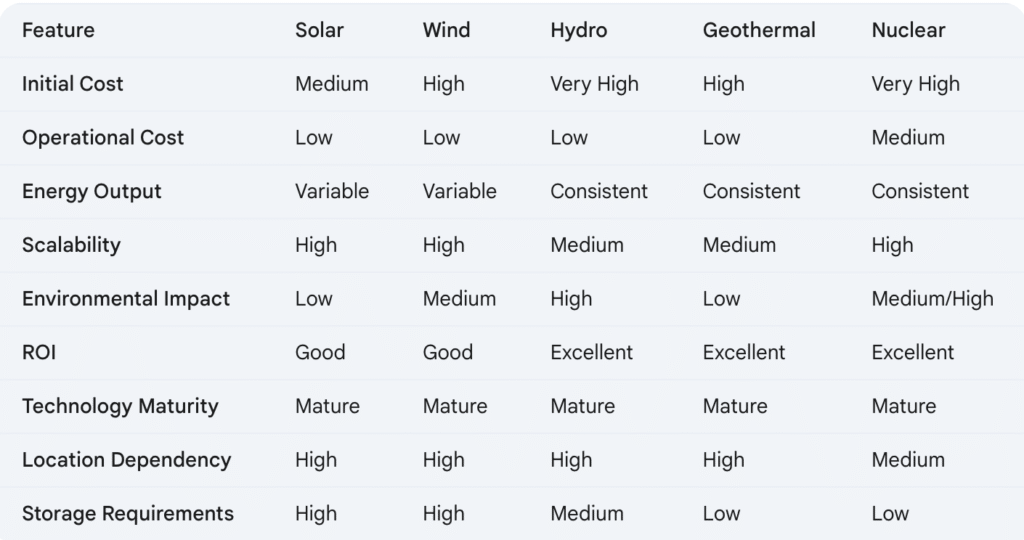
Conclusion:
Each renewable energy source offers unique advantages and challenges. Solar and wind provide decentralized solutions with decreasing costs, while hydro, geothermal, and nuclear deliver reliable baseload power. The optimal choice depends on factors like location, resource availability, investment capacity, and environmental considerations.
For investors and businesses, a thorough cost-benefit analysis and ROI assessment are essential. Considering the long-term sustainability goals and technological advancements, renewable energy investments offer significant potential for both financial and environmental returns.
Let’s continue the discussion in the comments! What are your experiences with these renewable energy sources, and what factors do you consider most critical for investment decisions?